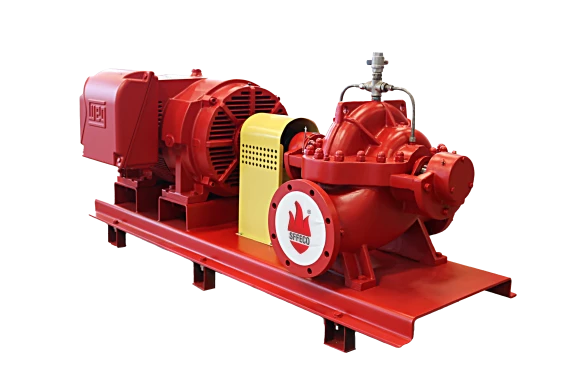
End-suction fire pump is a single-stage centrifugal pump that horizontally sucks in and pressurizes water. With a capacity range from 50 GPM to 1000 GPM, and pressures ranging from 65 PSI to 234 PSI, the maximum operating pressure falls between 180 PSI and 315 PSI. These pumps operate with high efficiency, are resilient to challenging conditions, and feature a motor and pump located on the same shaft. Their compact design saves space and facilitates maintenance. Approved by organizations such as Underwriters Laboratories (UL), Factory Mutual (FM), the European Union (CE), and the National Fire Protection Association (NFPA), these pumps are tested in accordance with these standards.
Split-case fire pump is a centrifugal pump that can be divided into two parts, offering easy maintenance and repair. Thanks to this feature, maintenance and repair tasks can be easily carried out. With a capacity range from 150 GPM to 3500 GPM, and pressures ranging from 88 PSI to 335 PSI, the maximum operating pressure falls between 220 PSI and 410 PSI. These pumps operate with high efficiency and are approved by organizations such as Underwriters Laboratories (UL), Factory Mutual (FM), the European Union (CE), and the National Fire Protection Association (NFPA), being tested in accordance with these standards.
Vertical turbine fire pumps are a specialized type of pump used in fire suppression systems. These pumps feature a vertical configuration and are typically utilized to draw water from underground sources. With a capacity range between 200 GPM and 2000 GPM, and pressure ratings varying from 40 PSI to 359 PSI, they operate within a wide range of specifications. Their maximum operating pressure falls between 290 PSI and 359 PSI. Vertical turbine fire pumps are recognized for their high efficiency and are approved by organizations such as Underwriters Laboratories (UL), Factory Mutual (FM), the European Union (CE), and the National Fire Protection Association (NFPA), undergoing rigorous testing to ensure compliance with these standards.
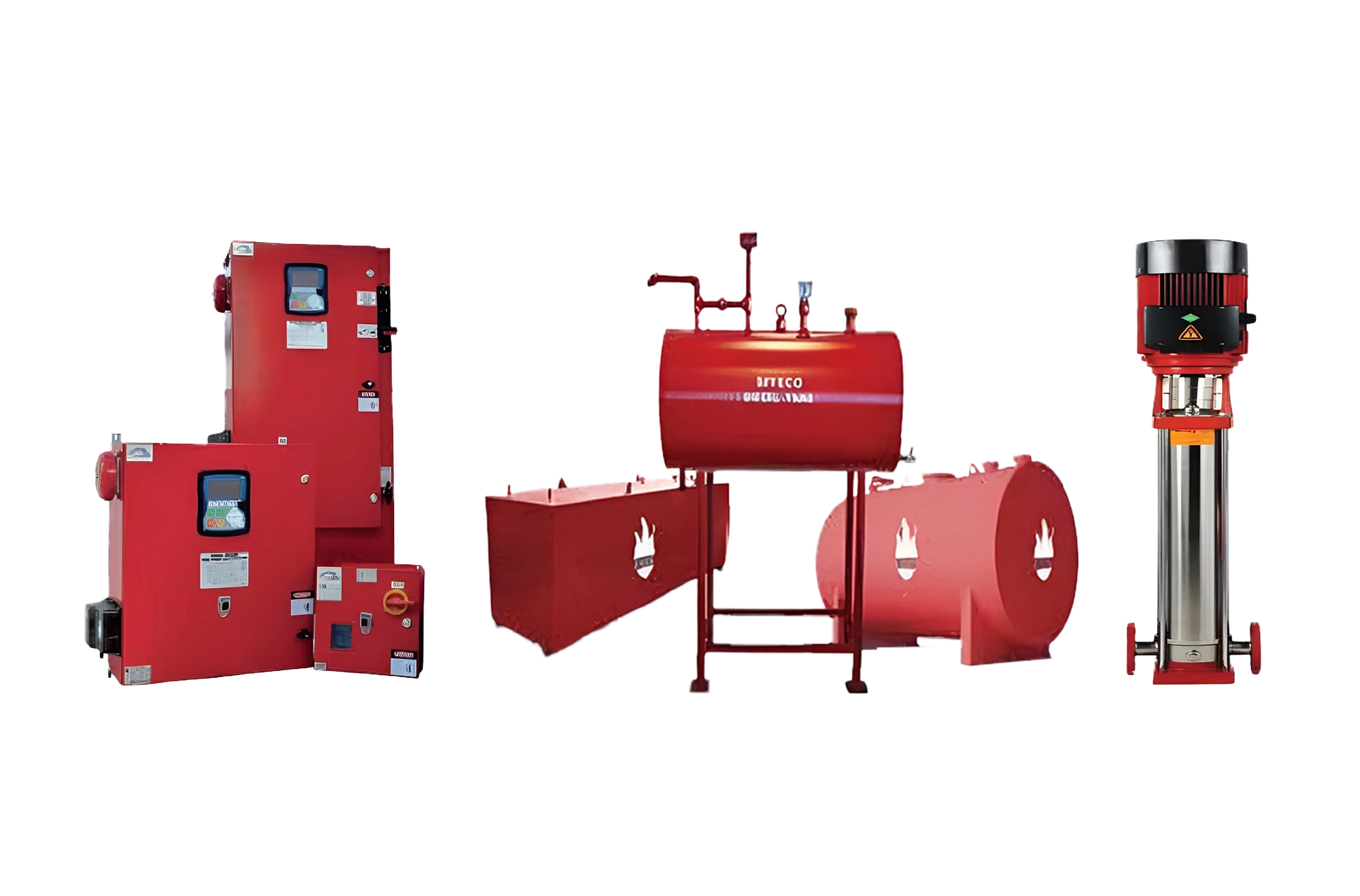
The effectiveness and reliability of fire suppression systems are ensured by a range of components working in harmony. These systems comprise a set of specifically designed components aimed at reducing fire risks and combating fires. Diesel tanks consist of above-ground steel tanks designed for flammable liquids, assembled and tested according to specific capacity ranges. Primary containment tanks come in horizontal and vertical cylindrical shapes, tailored to specific capacity ranges, while secondary containment tanks are offered in horizontal and vertical cylindrical structures. Fire pump control devices, including electric, diesel, and jockey pump control units, along with alarm panels, are assembled and tested in compliance with NFPA-20 and NFPA-70 standards. Jockey pumps are small motor-driven pumps used alongside main fire pumps to compensate for minor leaks and automatically maintain standby pressure. The cohesive operation of these components enhances the effectiveness of fire suppression systems, reducing fire risks and ensuring compliance with safety standards.