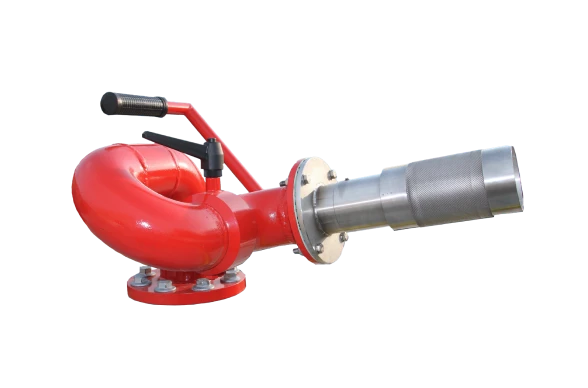
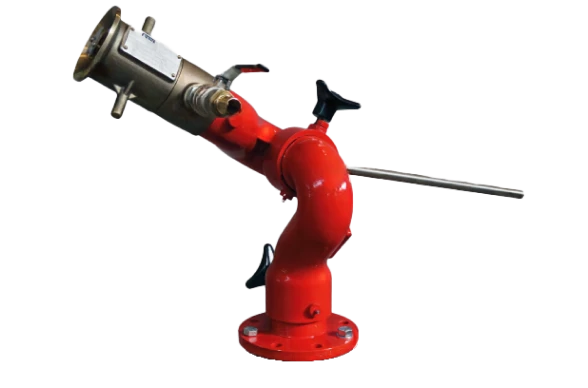
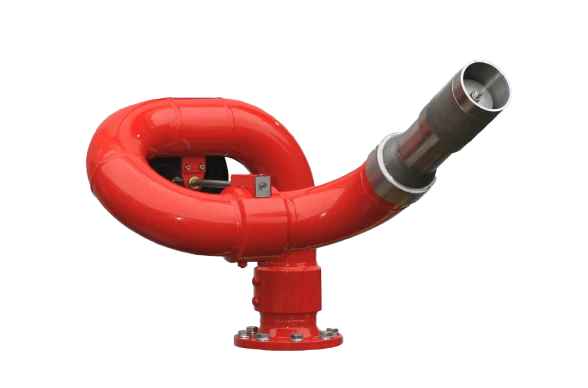
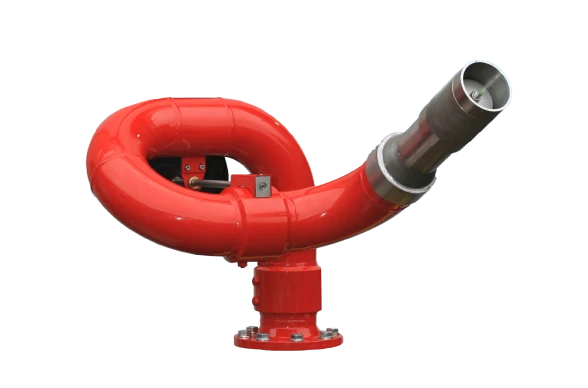
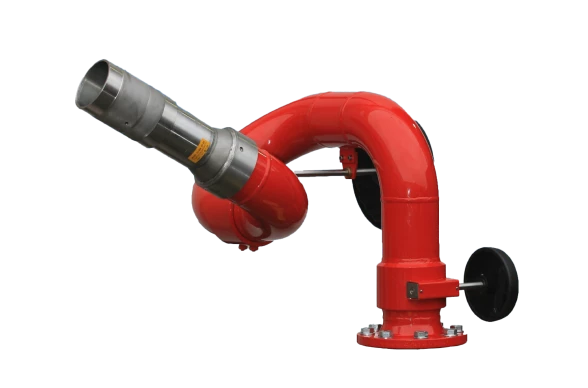
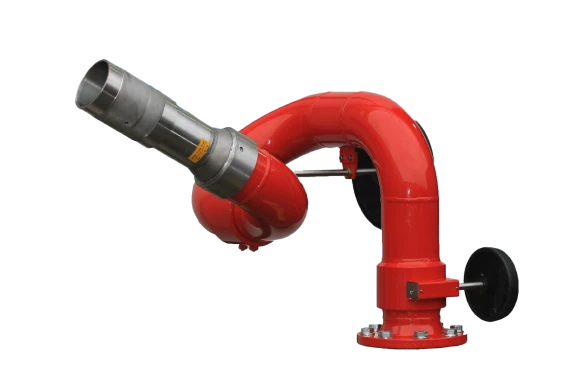
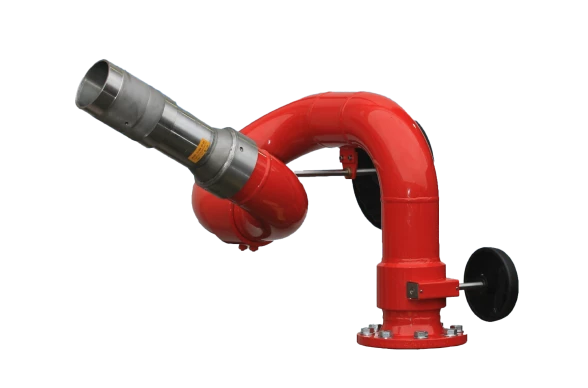
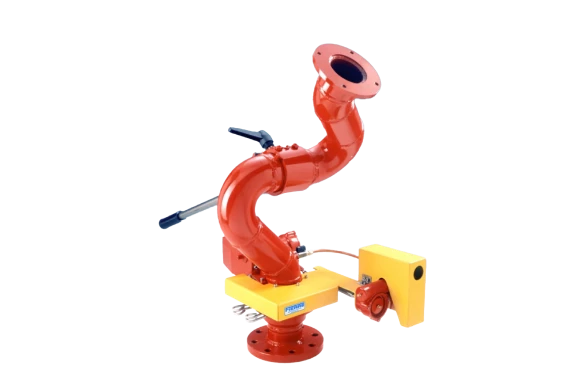
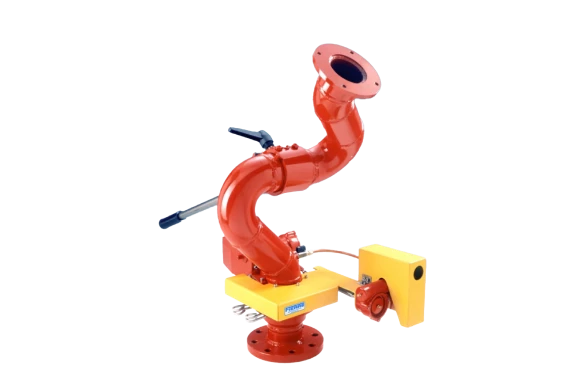
Hand-operated manual monitors can be made of body materials such as carbon steel, stainless steel, and a nickel-aluminum-bronze alloy mix, and they are equipped with lance and nozzle models of desired capacity and specifications according to project requirements. Model FI-MM3 is a monitor with a size of 3” (DN80). Model FI-MMP is available in options of 3” (DN80) and 4” (DN100). Due to its compact production dimensions, it is preferred for use in firefighting vehicles. Additionally, the FI-MMP model holds DNV-GL approval, recognized in the maritime industry. Model FI-MM3 BZ is made of cast material, and due to the nickel-aluminum-bronze alloy present in its casting structure, it is preferred for projects sensitive to the maritime industry and prone to corrosion.
Single Wheel handwheel Manual Monitors have bodies made of carbon steel or stainless steel. These monitors differ from lever-operated manual monitors not only in terms of operation but also in terms of size. They can have a body size ranging from 3" to 4" with a capacity ranging from a minimum of 4,000 liters per minute to a maximum of 6,500 liters per minute.
Double Wheel handwheel Manual Monitors have bodies made of carbon steel or stainless steel. These monitors differ from lever-operated manual monitors not only in terms of operation but also in terms of size. They can have a body size ranging from 3" to 6" with a capacity ranging from a minimum of 4,000 liters per minute to a maximum of 10,000 liters per minute.
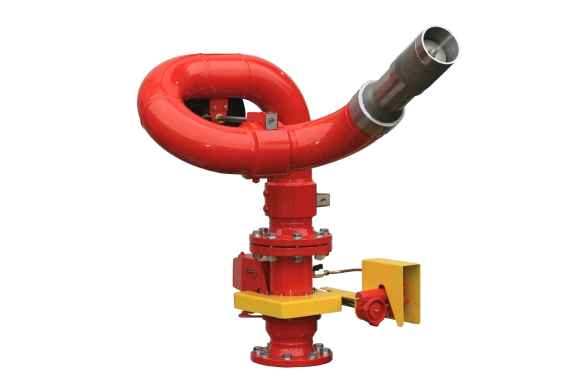
Self-oscillanting fire monitors are made of carbon steel or stainless steel, and have a body of 3" or 4". The self-oscillating mechanism is totally hydraulic: thanks to a water turbine and several reduction gears, the monitor is able to turn automatically for about 340 degrees. Furthermore, it is possible to control, thanks to lever or an handweel, the vertical movement. Self-oscillating fire monitors find a typical application on heliports, towers and foam trailers.
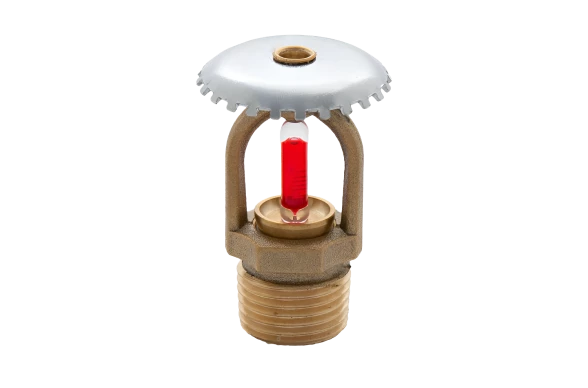
Upright sprinkler is specifically designed for projects classified under low and medium hazard categories. Parameters such as the K factor, response, and temperature are determined project-specifically through design and calculations. Upon installation, the deflector part of the sprinkler is positioned in an upward direction, and when activated, it intervenes in fires with a downward conical water flow. These sprinklers are preferred in various usage areas such as parking lots, workshops, waste collection centers, and shopping malls.