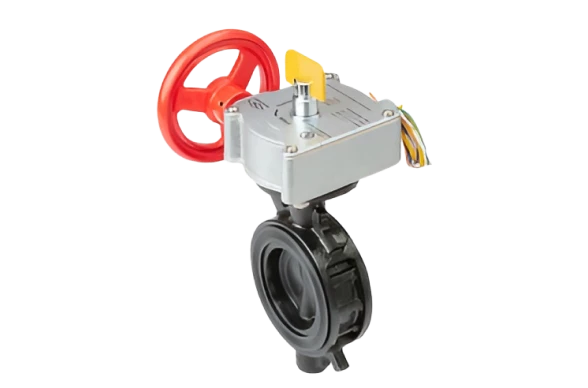
Butterfly Valve wıth Supervisory Switch is a regional control valve used as a shut-off or control valve on water supply lines. It is used to separate zones within indoor areas. The positions of valves in fire systems must be visible and electrically monitored. These valves feature a gear-operated handwheel, with a monitoring switch inside the valve and an open/closed position indicator.
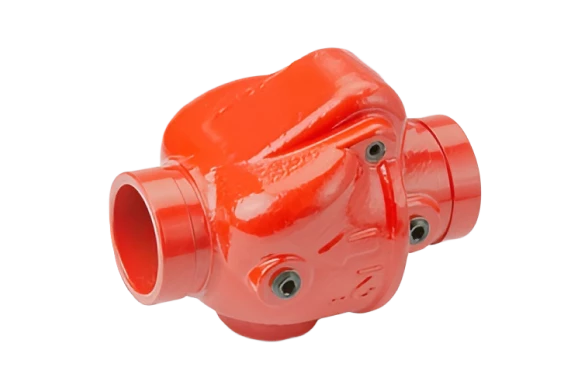
Check valves play a critical role in fire systems by preventing water backflow. These valves can be installed both vertically and horizontally, allowing water to flow in only one direction, thereby protecting equipment and preventing financial losses. With threaded, wafer, flanged, and grooved connection options, they adapt to various applications. The working pressure of check valves ranges from 175psi to 350psi, and they can operate at a maximum temperature of 120ºC. They are commonly used in pump discharge lines, fire department connections, and vertical fire riser systems.
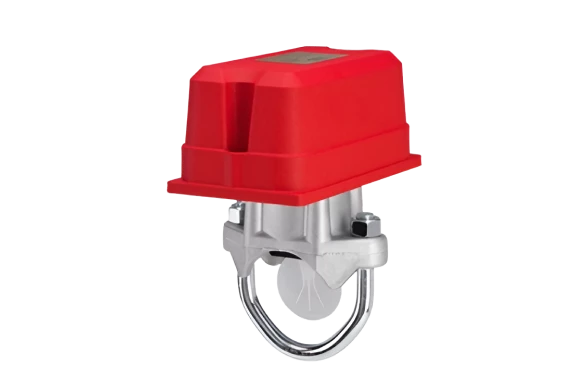
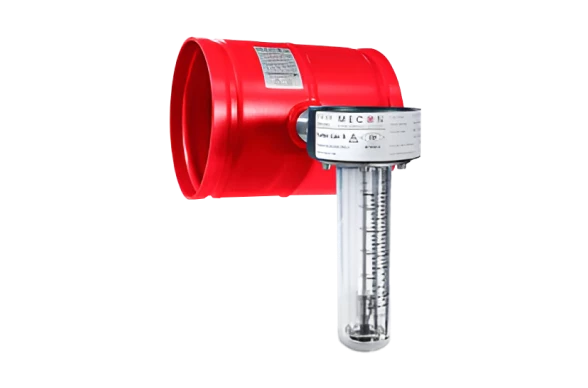
Flow switches play a critical role in fire detection and suppression systems. These devices detect water flow between 4 and 10 GMP, sending information to the fire control panel and activating the pump. Typically pedal-operated, flow switches are used exclusively in wet pipe systems and can be mounted with threaded fittings or U bolts. They operate at pressures of 400-450 PSI and temperatures between 0 and 49°C. By detecting water flow, flow switches ensure the system functions correctly, although they are limited to wet pipe systems only.
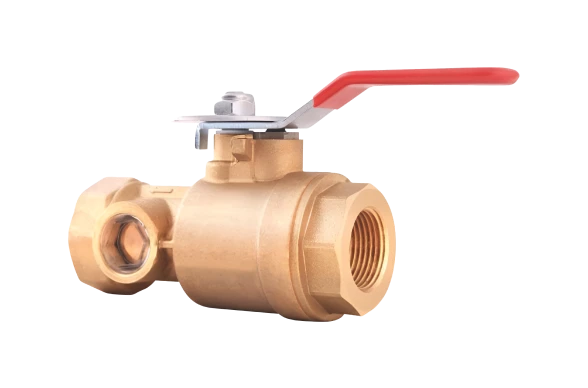
Test and Drain Valve is a critical component for assessing the effectiveness of fire suppression systems. It is used to evaluate whether the system functions correctly after installation and during its use. This valve facilitates system testing, allowing for performance checks after maintenance and repairs. It ensures that the system operates efficiently during a fire, verifying the proper delivery of water and pressure. Essential for testing water flow and pressure, the valve helps identify and rectify any system deficiencies. Therefore, Test and Drain Valves are indispensable for ensuring the reliable performance of fire protection systems.
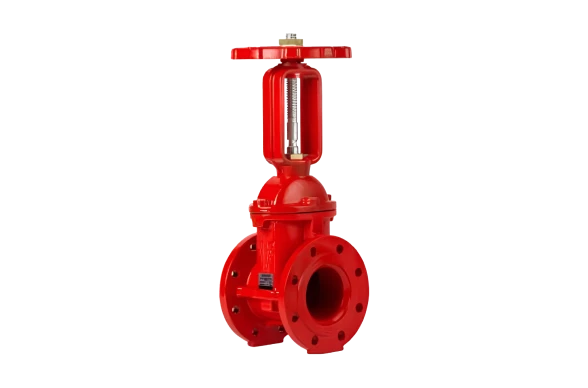
OS&Y Gate Valves are used as regional control valves and serve as shut-off valves on water supply lines. They do not disrupt flow when fully open and the open position can be visually monitored by the up and down movement of the stem, with electrical monitoring possible via a monitoring switch. Compared to butterfly valves, they create less hydraulic loss. Their disadvantages include taking up more space and being more costly, but they offer the advantage of reducing pump pressure due to lower pressure loss. They can be connected using threaded, flanged, or grooved connections and operate at pressures between 175 psi and 350 psi and temperatures between 0.6°C and 52°C. They are commonly used in front of water tanks and on pump lines.
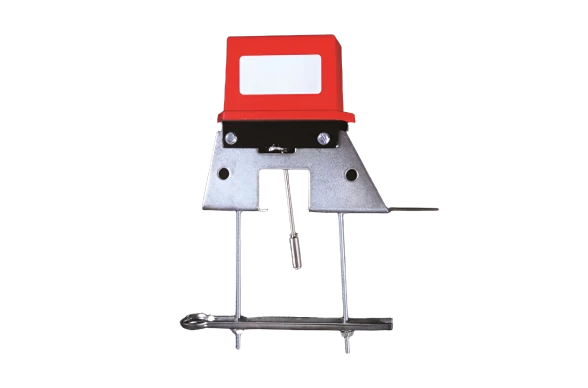
OS&Y Valve Supervisory Switch transmits the valve's open or closed status to the fire alarm panel via dry contacts. It is suitable for both indoor and outdoor use. It can be connected in horizontal and vertical types, with connections compatible with sizes ranging from 2” to 12”, and operates within a temperature range of 0°C to 49°C.
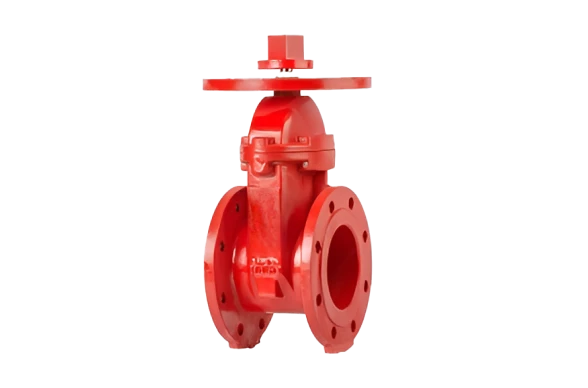
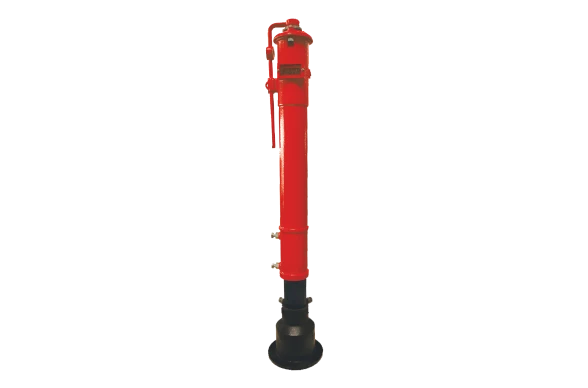
NRS Gate Valves are used in fire systems to cut off and control underground water lines. These valves can be used with post indicators that show open/closed positions and eliminate the need for a valve room when installed underground. Suitable for both indoor and outdoor use, these valves are particularly advantageous in preventing freezing in outdoor buried piping systems. They offer the benefit of low pressure loss compared to other control and shut-off valves, though they may be less economical and require more space. These valves are essential in fire installations to ensure control and cut-off functions, especially in buried pipelines subject to freezing.
Ön yazı - lorem ipsum dolor sit amed